
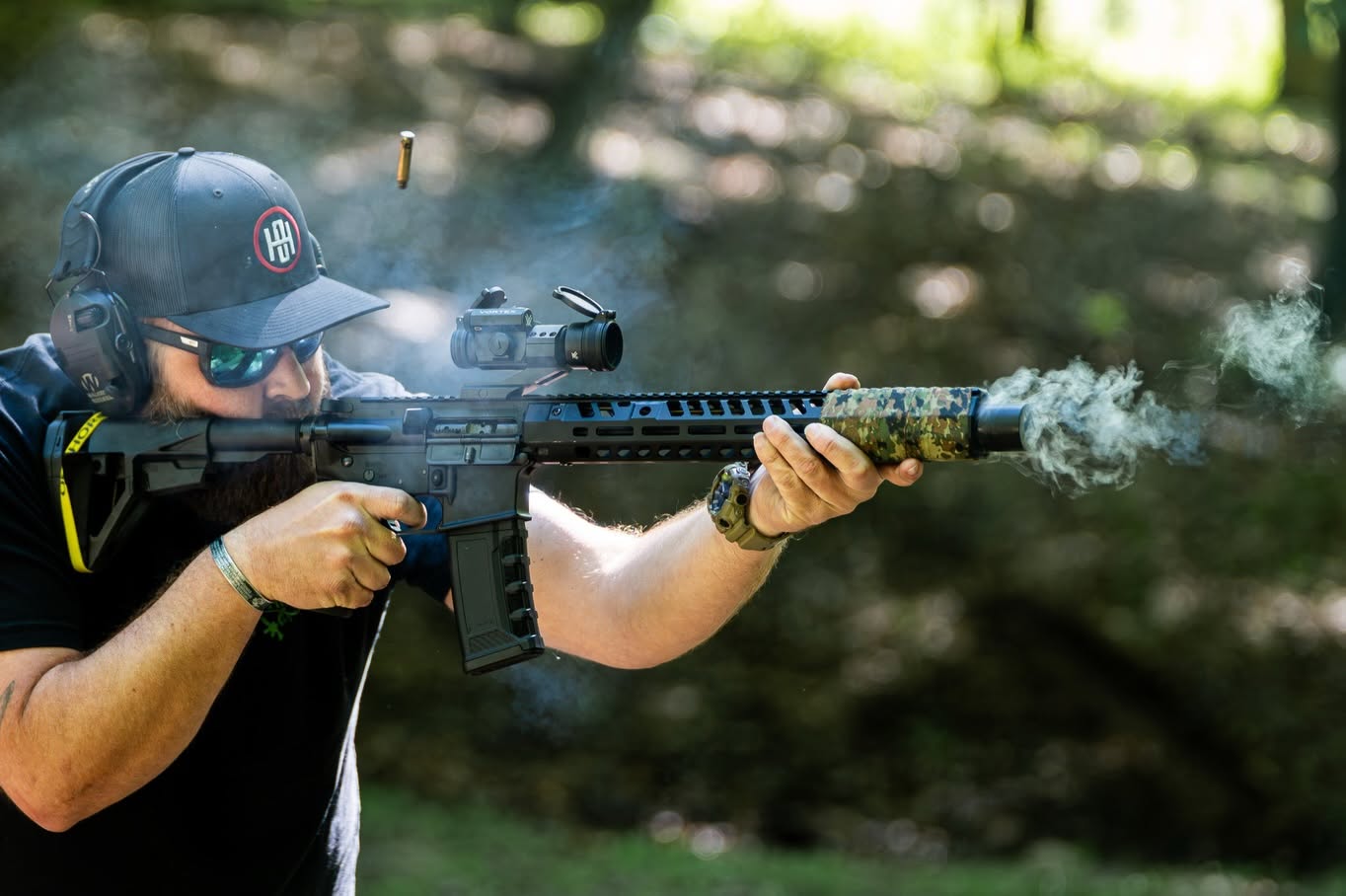
Buffer weight makes a real difference in how an AR-15 runs, and it’s an easy part to swap. Here’s what each One Horse buffer weight is for, how to pick yours, and how to check it at the range.
Your buffer sits in the buffer tube (the tube your stock slides on), right behind the bolt carrier. When a round fires, the carrier drives the buffer back against the spring, and the spring pushes everything home and loads the next round.
A standard carbine buffer weighs about 3.0 oz. H1, H2 and H3 buffers are the same size on the outside, with heavier tungsten weights inside. The higher the number, the heavier the buffer. You’ll also see the H1 called an “H” or “heavy” buffer.
Most people spend money on the muzzle end of an AR and never think twice about the few ounces of steel and tungsten in the buffer tube. That’s a mistake. The buffer is one of the cheapest, easiest ways to change how a rifle feels and runs, and it’s the first thing to look at when a gun is running rough, beating itself up, or throwing brass into the next county.
All three One Horse buffers next to a standard carbine buffer. The price column shows the price for your account.
| Buffer | Weight | Weight inside | Best for | Watch out for | Price |
|---|---|---|---|---|---|
| Standard carbine bufferFor comparison | 3.0 ozTypical weight. The starting point. | Usually three steel weights | Rifles that already run right, with brass landing at 3 to 4:30 o’clock. | On an over-gassed rifle it can feel harsh and throw brass forward. | Comes in our Carbine Buffer Tube Kit |
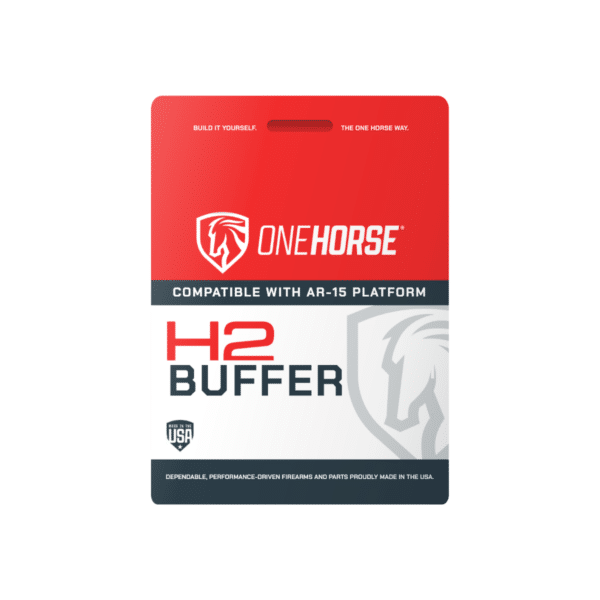
| H1 bufferSKU OH-BWH1 · UPC 850088856118 | 3.8 ozAbout 0.8 oz more than standard | Internal tungsten insert | Slightly over-gassed carbine and mid-length 5.56 builds with 14.5″–16″ barrels, shot without a suppressor. | A small step. If brass still lands at 1 to 2 o’clock, move up to the H2. | $39.99 MSRP |
| H2 bufferSKU OH-BWH2 · UPC 850088856125 | 4.7 ozAbout 1.7 oz more than standard | Dual tungsten weights | Short barrels, pistol-length gas, suppressed shooting and hot ammo. The best first buy for most builders. | On a rifle that is only a little over-gassed, check that the bolt still locks back on an empty magazine. | $49.99 MSRP |
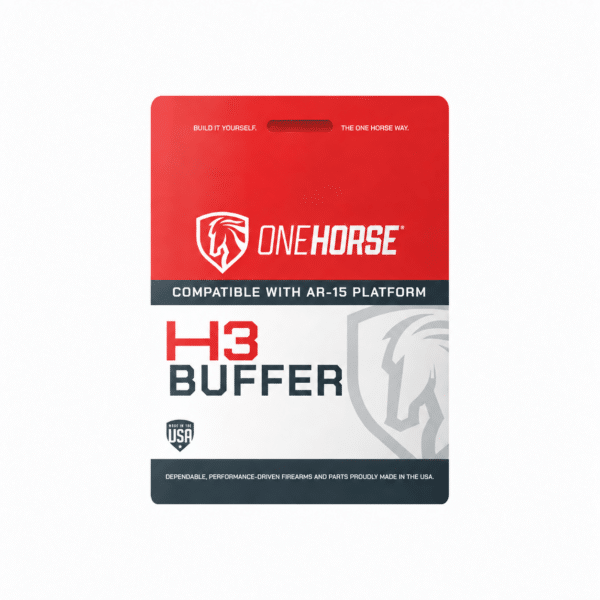
| H3 bufferSKU OH-BWH3 · UPC 850088856132 | 5.6 ozAbout 2.6 oz more than standard | Full tungsten weight stack | Heavily suppressed SBRs, and pistol-gas 10.3″–11.5″ builds or other rifles still over-gassed on an H2. | A real change. On a rifle that’s only a little over-gassed, it can stop weaker ammo from cycling. Test it. | $89.99 MSRP |
All three: mil-spec carbine-length body, made to mil-spec dimensions for drop-in fit in a mil-spec carbine buffer tube. No proprietary tube, no fitting, no modifications.
Every time an AR fires, gas drives the bolt carrier back, the buffer compresses the spring, and the whole assembly returns forward and locks up. That has to happen in the right window. If the carrier comes back too hard, it tries to pull the case out while pressure is still high, the brass gets beat up, the bolt can bounce on the way home, and the rifle punishes itself and you. Too soft, and the carrier doesn’t travel far enough to pick up the next round.
A heavier buffer slows the carrier on its way back and keeps it in the tube a little longer before it returns. That does three useful things:
How hard a rifle cycles depends on its barrel, its gas system and port, any suppressor, the ammo and whether it has an adjustable gas block. That’s why one buffer weight doesn’t fit every build, and why we make three.
If you don’t want to overthink it, match your rifle to one of these.
The fix for a rifle that’s slightly over-gassed: it runs fine but ejects at 1 o’clock, or feels sharper than it should with a mid-length gas system.
Best fit: carbine and mid-length 5.56 builds with 14.5″–16″ barrels, shot without a suppressor, when you want to take the edge off without risking short-stroking.
Shop the H1 buffer ›The workhorse of the three, and the right first buy for most builders. It’s enough weight to settle a rifle down without going so heavy that you have to start rethinking spring rate and gas port size.
Best fit: short barrels, pistol-length gas, suppressed shooting and hot ammo. Adding a suppressor? Start here.
Shop the H2 buffer ›Our heaviest, for rifles that are truly over-driven. It soaks up more of the recoil push before it reaches the receiver.
Best fit: heavily suppressed SBRs, pistol-gas 10.3″–11.5″ builds that are still over-gassed on an H2, or any rifle that still throws brass forward on an H2. Fair warning: the H3 is a real change. On a rifle that’s only a little over-gassed, it can stop weaker ammo from cycling reliably. Test it.
Shop the H3 buffer ›Start with the suggested buffer. Then check your brass and move one step at a time.
| Your build | Start with | Brass still at 1–2 o’clock? Go to | Bolt won’t lock back on empty? Go to |
|---|---|---|---|
| 16″ rifle that already runs well (brass at 3 to 4:30 o’clock, bolt locks back) | Keep your current buffer | H1 | — |
| 14.5″–16″ carbine or mid-length gas, no suppressor, feels snappy | H1 | H2 | Standard carbine buffer |
| Short barrel or hot ammo | H2 | H3 | H1 |
| Pistol-length gas | H2 | H3, only if it’s still over-gassed on the H2 | H1 |
| Adding a suppressor | H2 | H3 | H1 |
| Heavily suppressed short-barreled rifle | H3 | The H3 is our heaviest. Next, fine-tune the gas. | H2 |
| Atrius FRS (forced reset) build | H2 | H3, also if you see light primer strikes | Stay on an H2 or H3, the Atrius minimum |
If you want to do it right, watch where your empty cases land. Picture a clock face: the muzzle points to 12 o’clock and your stock to 6.
Go one step at a time. Swap the buffer, shoot a magazine, check the pile. Test with the lightest-loaded ammo you plan to shoot. Running an adjustable gas block? Change one thing at a time. We suggest picking your buffer weight first, then fine-tuning the gas.
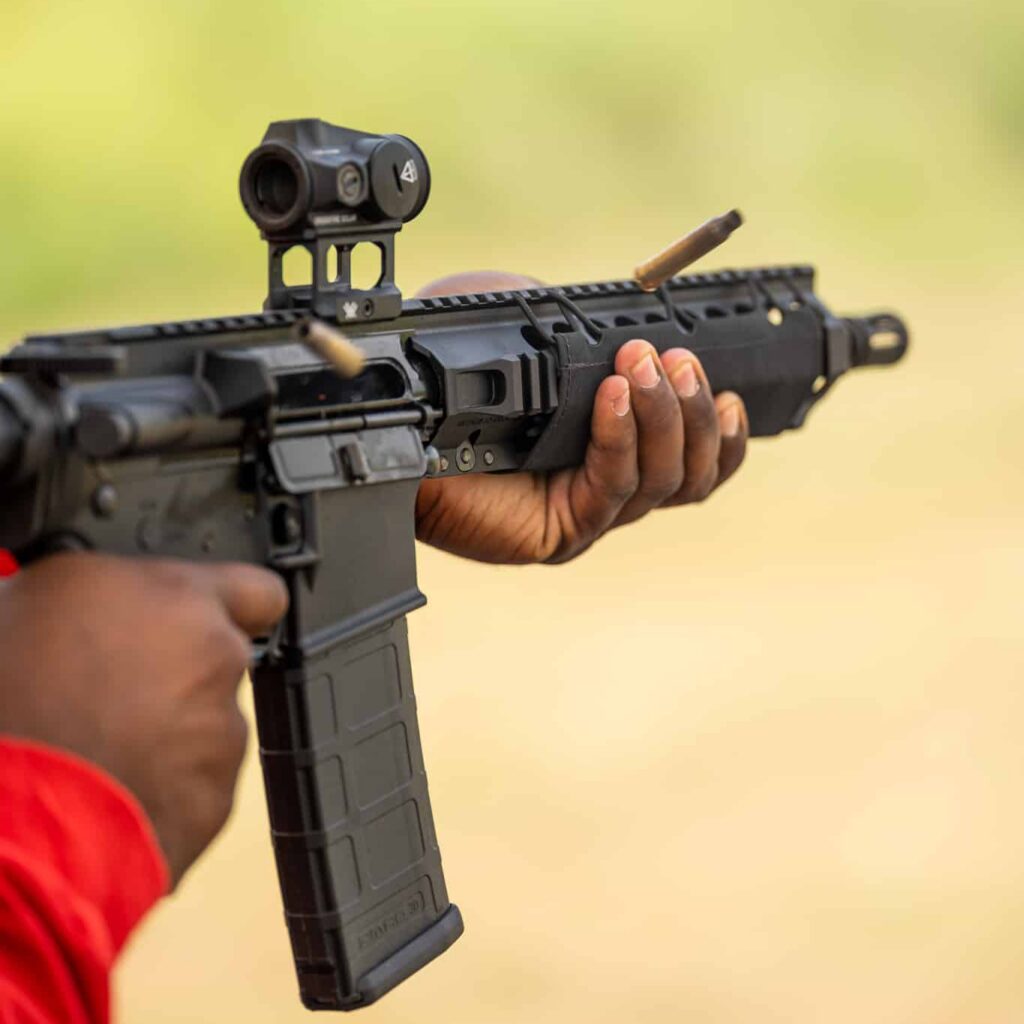

Buffer weight matters even more in a forced reset build. Atrius Development Group lists an H2 or H3 buffer among the minimum requirements for its Atrius Forced Reset Selector (FRS), along with a full-profile bolt carrier group and a compatible lower receiver and trigger. Atrius also points to an H2 or H3 buffer when chasing light primer strikes.
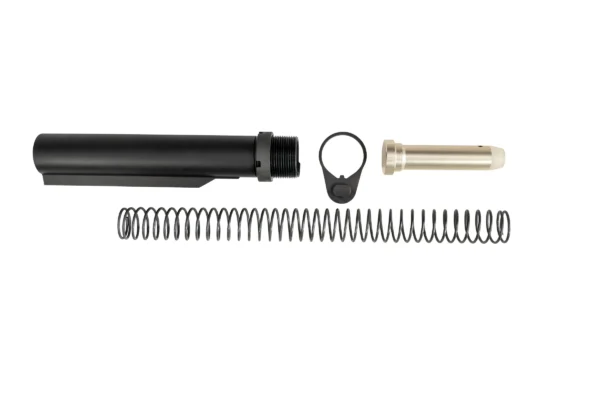
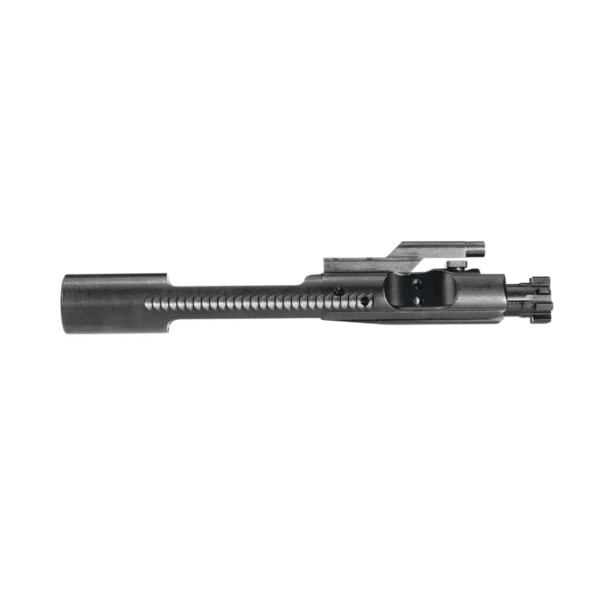
That makes the One Horse H2 and H3 a natural match for an Atrius FRS build. Pair them with a One Horse M16 bolt carrier group and a carbine buffer tube kit, which comes with a standard carbine buffer you can swap for the H2 or H3. All are American-made One Horse AR-15 parts.
Rather skip the tuning? Every One Horse Express comes with the Atrius FRS installed and a tuned buffer and spring system, fitted and tested at the factory. Built To Run™.
Pick your weight. The price shown is the price for your account.
Free shipping on orders over $399. Buffers and parts ship straight to you; no FFL required. See all One Horse buffers.
Weight. All three are carbine-length AR-15 buffers with the same outside size, but each step up uses more tungsten inside. The One Horse H1 weighs 3.8 oz, the H2 4.7 oz and the H3 5.6 oz. A heavier buffer slows the bolt carrier more, which settles down a rifle that is over-gassed.
Start with the H2. It is enough weight for most short barrels, pistol-gas builds, suppressed rifles and forced reset builds. Move to the H3 only if the rifle is heavily suppressed, or if it still throws brass forward (1 to 2 o’clock) on the H2. If the H3 stops the bolt from locking back on an empty magazine, go back to the H2.
One Horse buffers weigh 3.8 oz (H1), 4.7 oz (H2) and 5.6 oz (H3). A standard carbine buffer is about 3.0 oz, so they add roughly 0.8, 1.7 and 2.6 oz. H2 and H3 weights vary a little from brand to brand.
If your rifle runs fine but feels snappy or throws brass forward, try the H1. If you have a short barrel, a suppressor or hot ammo, start with the H2. Pistol-length gas starts with the H2 too. If the rifle is heavily suppressed or is still over-gassed on an H2, step up to the H3. Not sure? The H2 is the right first buy for most builders. See the quick picker.
If a 16-inch rifle runs well, drops brass at 3 to 4:30 o’clock and locks back on an empty magazine, it may not need a heavier buffer at all. If it feels snappy or throws brass forward, try the H1. Adding a suppressor or a forced reset selector? Start with the H2. See the buffer-by-build table.
Heavy. The H1, also called an H buffer, is one step heavier than a standard carbine buffer. The H2 is the next step up, and the H3 is the heaviest of the three.
Start with the H2. A suppressor adds back pressure, and the H2 is the buffer we recommend whenever a suppressor comes into the picture. For heavily suppressed short-barreled rifles, or a rifle that still throws brass forward on an H2, try the H3.
Short barrels and pistol-length gas systems usually start with the H2. Step up to the H3 if the build is heavily suppressed, or if a pistol-gas 10.3 to 11.5 inch build is still over-gassed on an H2. Either way, the buffer has to go in a mil-spec carbine-length buffer tube.
It changes how recoil feels. A heavier buffer slows the bolt carrier and spreads out the push, so there is less sharp felt impulse and less pounding on the buffer tube and parts. It does not change the power of the cartridge itself.
Yes. If the buffer is heavier than your rifle’s gas can push, the carrier may not travel far enough to load the next round, and the bolt may not lock back on an empty magazine. That is called short-stroking. If you see it, go one buffer lighter, and always test with the weakest ammo you plan to shoot.
Brass lands forward, around 1 to 2 o’clock, often with dented case mouths. The rifle feels harsh, and the bolt can bounce, which may show up as light primer strikes. Go one buffer heavier and check your brass again.
They will fit a mil-spec carbine-length buffer tube, the kind used with most collapsible stocks. They drop in with no fitting and no proprietary tube. They are not made for rifle-length (fixed A2-style) buffer tubes, which use a longer rifle buffer. Starting a build? The One Horse AR-15 Carbine Buffer Tube Kit comes with a standard carbine buffer that you can swap for an H1, H2 or H3. See the carbine buffer tube kit.
Usually not. The H2 is heavy enough to settle a rifle down without making you rethink spring rate. If you move to the H3, or you are fine-tuning a suppressed or forced reset build, the buffer spring is the next thing to test. Change one thing at a time.
Start with the buffer. It drops in with no gunsmithing. If you switch between suppressed and unsuppressed shooting, or an H3 still is not enough, an adjustable gas block is the next step. Change one thing at a time: pick your buffer weight first, then fine-tune the gas.
Unload the rifle, remove the magazine and check that the chamber is empty. Push out the rear takedown pin and tip the upper open. Hold the buffer with your thumb, press down the buffer retainer (the small pin at the front of the buffer tube) and ease the buffer and spring out. Slide the spring onto the new buffer, push both in until the retainer pops back up, close the rifle and do a function check.
Atrius Development Group lists an H2 or H3 buffer as a minimum requirement for its Atrius Forced Reset Selector (FRS), along with a full-profile bolt carrier group. Start with the H2. Atrius also points to an H2 or H3 buffer if you see light primer strikes. Learn more about the Atrius FRS.
One Horse buffers are made in the USA. A buffer is not a firearm, so it ships straight to you. No FFL is required.
Yes. Licensed dealers can apply online for a One Horse dealer account. Once approved and logged in, you see your dealer price on the products in this article. Apply to become a One Horse dealer.
Buffers are an easy add-on for every AR-15 customer at your counter. Stock American-made One Horse H1, H2 and H3 buffers, AR-15 parts and Express rifles at dealer pricing. Apply online: upload your FFL and tax-exempt document, and our team will reach out about our programs and pricing. Already a dealer? Log in and the prices on this page switch to your dealer pricing.
One Horse H1, H2 and H3 buffers are made in the USA. No sourcing them overseas and putting a logo on the box.
American Made · Family Owned · Veteran Owned
Not legal advice. This article describes AR-15 buffers and related parts, including the Atrius Forced Reset Selector. Federal, state and local laws vary and change, and it is the buyer’s responsibility to follow them. Placing an order does not mean an item is legal where you live. Questions? Call 812-200-0305 or email [email protected].